
A Book Review
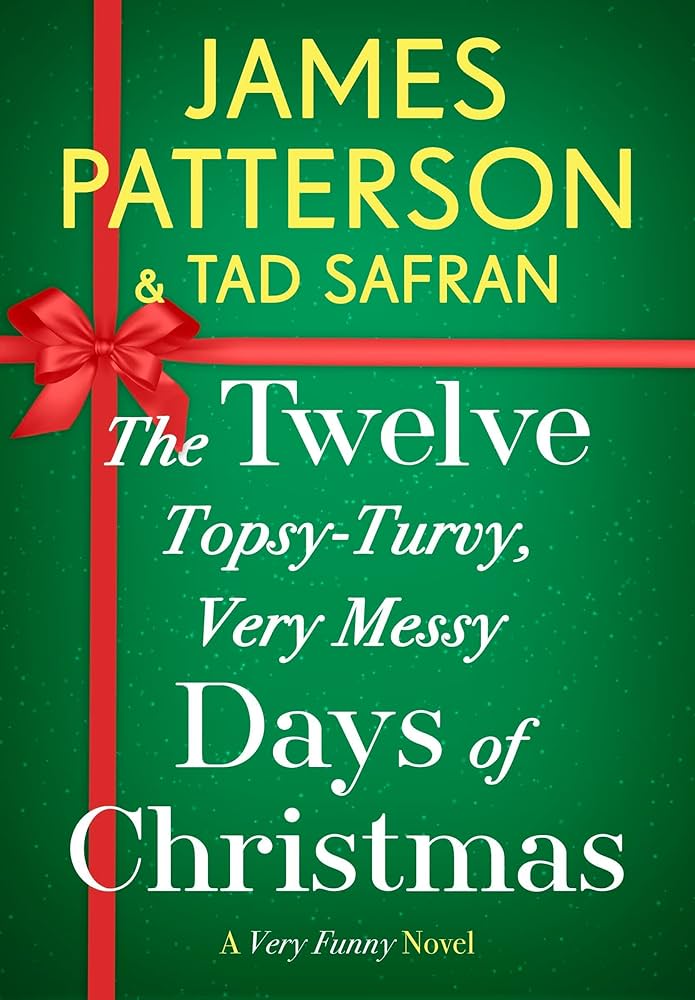
Even though James Patterson has written and co-written approximately 478,932.7 books (that may not be an accurate number), The Twelve Topsy-Turvy Messy Days of Christmas is only the second one I’ve read.
The tagline on the cover of—“A very funny novel”—both lured me in and urged me to proceed with caution. It’s a bold promise, and in my experience, those often fail to deliver what they so confidently claim.
But here, I’m happy to say, the book delivered much more than a very funny novel. It gifted me a new holiday classic—one I’ll happily return to again and again.
The story centers on the Sullivan family. Henry and his two children, Will and Ella, who haven’t celebrated Christmas since the loss of Henry’s wife and the children’s mother. Henry is a bit reminiscent of both Scrooge and the Grinch, and the kids are desperate to reclaim the festive holiday they, like most children, eagerly anticipate each year.
The children believe the problem is simple: their father doesn’t have a wife. So naturally, they decide to fix that—hoping it will restore not only presents under the tree, but the magic of Christmas itself.
And somehow, their wishes begin to pay off . . . sort of.
Mysterious gifts start appearing at the Sullivan house. What kind of gifts, you ask? The exact ones listed in the beloved holiday song The Twelve Days of Christmas.
This is where the novel absolutely earns its “very funny” label. I laughed out loud more than once. But beneath the silliness and absurdity is something tender and deeply human—a story about grief, healing, and connection.
I told my husband multiple times while reading it (which didn’t take long) that I wanted—no, needed—him to read this book. Soon. A little while later, he still hasn’t. [Buddy, if you’re reading this review: read the book!]
But I digress.
These bizarre gifts create plenty of chaos and comedic moments—some of which reminded me of National Lampoon’s Christmas Vacation. Yet they also bring real challenges. And more importantly, they force the Sullivans to crack open emotionally, rediscovering themselves and the community around them.
The result is truly a gift—to the Sullivans and to the reader. I closed my Kindle with tears in my eyes. Tears over the ending, the journey, and the sheer enjoyment of the experience.
Art, of course, is subjective, so I can’t promise everyone will feel the same way I did. But if you enjoy holiday stories with a blend of silly and sweet, I can’t recommend this book enough.
In fact, I can’t wait to read it again.
 Lisa M. Gott